

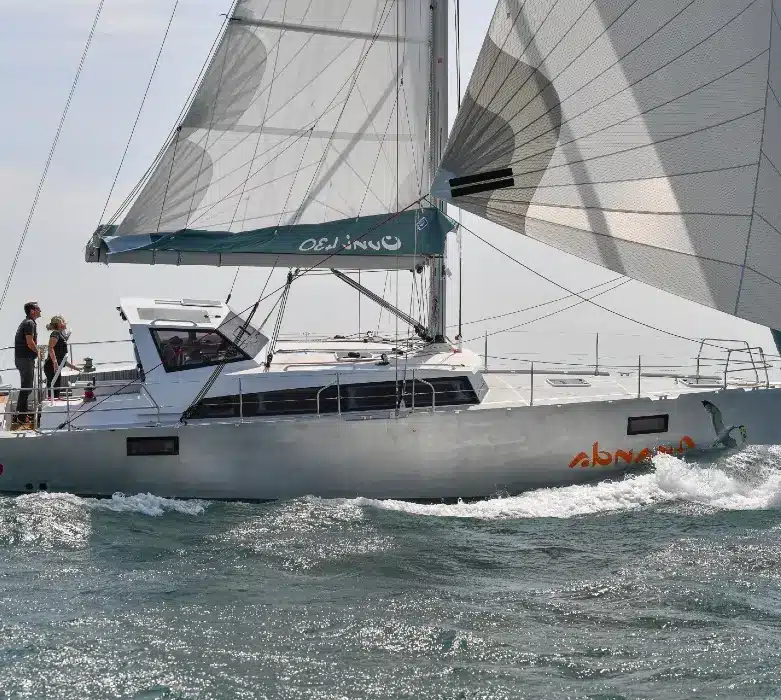
Since its founding back in 1973, Alubat has been building sailing boats with a conviction that has never wavered: a blue water sailing boat must, above all, be designed for safety, freedom and durability.
Now, over fifty years later, this philosophy remains more than ever at the heart of our DNA. It is reflected in bold technical choices - all-aluminium construction, the centreboard, the lifting keel - but also in a unique approach to designing our yachts: listening to those who sail, evolving our models and enabling everyone to tailor their yacht to their plans and their desires.
Semi-thick aluminium
A different approach to construction
Using aluminium for boatbuilding is one thing. Choosing its thickness and how to work with it is quite another.
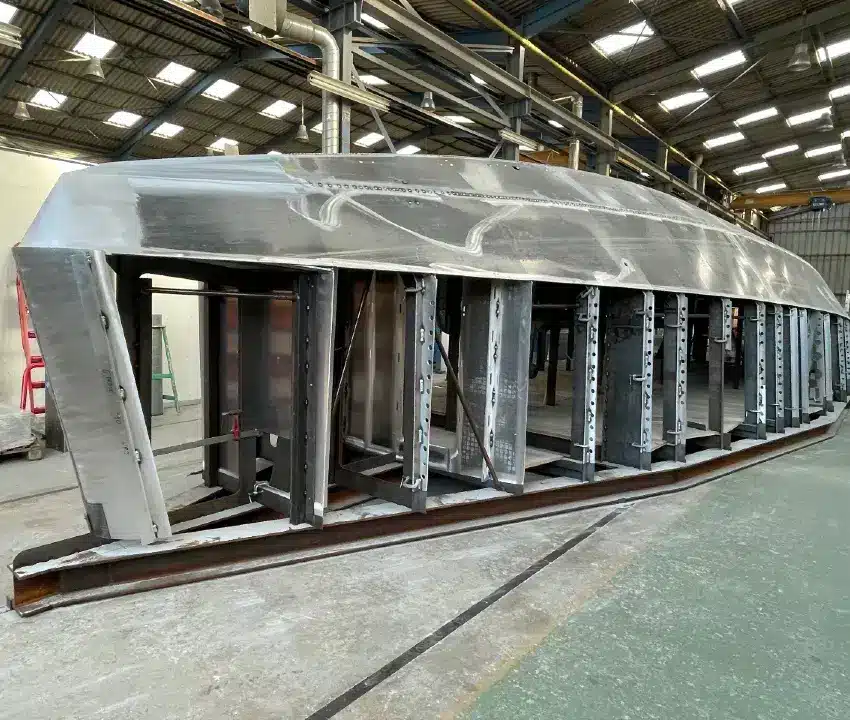
Since 2020, Alubat has developed a distinctive approach to aluminium construction by prioritising the use of so-called “semi-thick” sheets. This choice is one of the key technical features of the “New Generation” OVNI yachts.
On an OVNI, the thickness of the aluminium contributes directly to the rigidity of the structure. Depending on the model and the areas concerned, certain parts of the structure can reach 12 mm for the underwater hull, 10 mm for the topsides and 8 mm for the deck.
This thickness helps to minimise the need for structural reinforcements. While construction in thinner aluminium requires more stiffeners to ensure the rigidity of the whole structure, the use of thicker sheets allows the material itself to contribute more to the structural strength.
This approach offers several advantages:
- The first relates to the rigidity and stability of the hull. As it is less reliant on reinforcements, the structure is less prone to deformation of the plates between the various structural elements. The hull therefore retains a more stable geometry over time and when subjected to the stresses encountered under way.
- The second advantage is less obvious, but particularly valuable on board: living space.
Every structural strut that runs through an interior space takes up space. By minimising their number, Alubat can maximise interior volume and design more spacious and practical layouts.
In other words, the thickness of the aluminium does not merely serve to reinforce the boat: it also helps to save space on board.
This is a particularly relevant feature for yachts designed for blue water work, where on-board comfort has got to be balanced against the constant need for robustness and safety.
This approach comes into its own when combined with the 100 per cent aluminium construction of the OVNI and CIGALE models. At ALUBAT, aluminium is not limited to the hull: it forms the very framework of the boat, from the hull to the deck, including the coachroof and the cockpit.
It is this combination of material thickness, minimal use of reinforcements, structural rigidity and optimised space that defines Alubat’s distinctive design philosophy.
What sets Alubat apart
Of course, Alubat isn’t the only company to have chosen aluminium for building blue water cruising yachts.
For several decades, European shipyards have developed their own expertise in this field, adopting different approaches to design, construction and sailing programmes. Some favour centreboards, others, fixed or lifting keels; some offer production series, others entirely bespoke builds.
This diversity reflects the wealth of European expertise and a shared conviction: aluminium offers unique possibilities for designing sailing yachts intended for blue water voyages.
The Alubat DNA is based on
01
The ALL-aluminium approach
While some builders combine aluminium with composite materials, Alubat has maintained construction entirely in aluminium for the OVNI and CIGALE models.
02
Construction in semi-thick aluminium
The use of semi-thick aluminium, developed to combine rigidity, robustness and durability, while keeping the displacement under control.
03
Freedom of sailing
With the OVNI range, the centreboard reduces draught, allowing access to areas inaccessible to fixed-keel yachts. With the CIGALE 15 QR, the lifting keel offers another way of combining performance and freedom of sailing.
04
Customisation
But there is another factor, perhaps less obvious, that makes all the difference: Customisation
your boat,
your programme,
your way of sailing
At Alubat, every boat is the result of a coming together of a sailing project and the shipyard’s expertise.
Because every sailing project is different, we take the time to discuss your habits, your aspirations and your constraints.
Layout, equipment, ergonomics, materials, interior ambience, technical solutions, energy, electronics and even the organisation of spaces: every yacht can be designed and adapted to suit its future sailing programme.
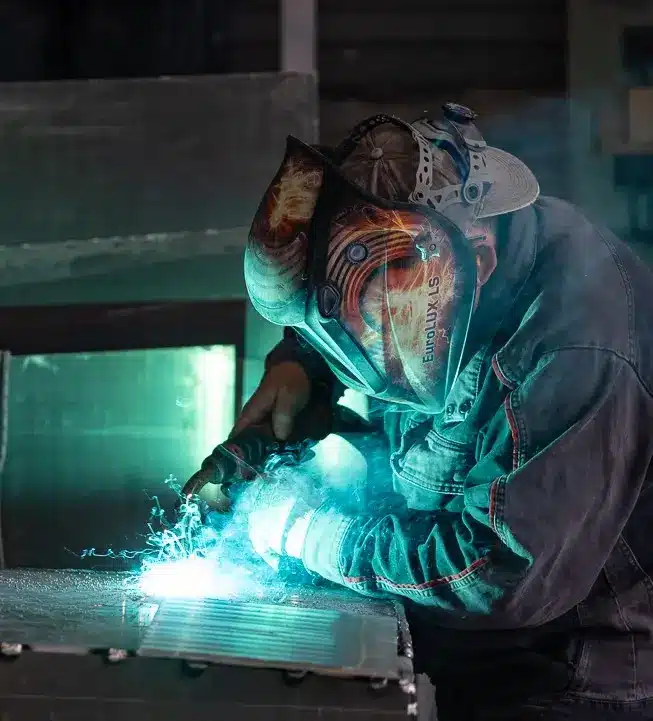
This capacity for customisation is based on our mastery of the various stages of production within the shipyard and on the expertise of our teams. Metalworkers, joiners and cabinetmakers, painters, deck hardware specialists, and the design team: all trades work in close collaboration to create a boat that is consistent down to the smallest detail.
The result: A production yacht that is never quite standard.
First and foremost, an OVNI or a CIGALE is its owner’s boat.
Innovation without losing sight of the essentials
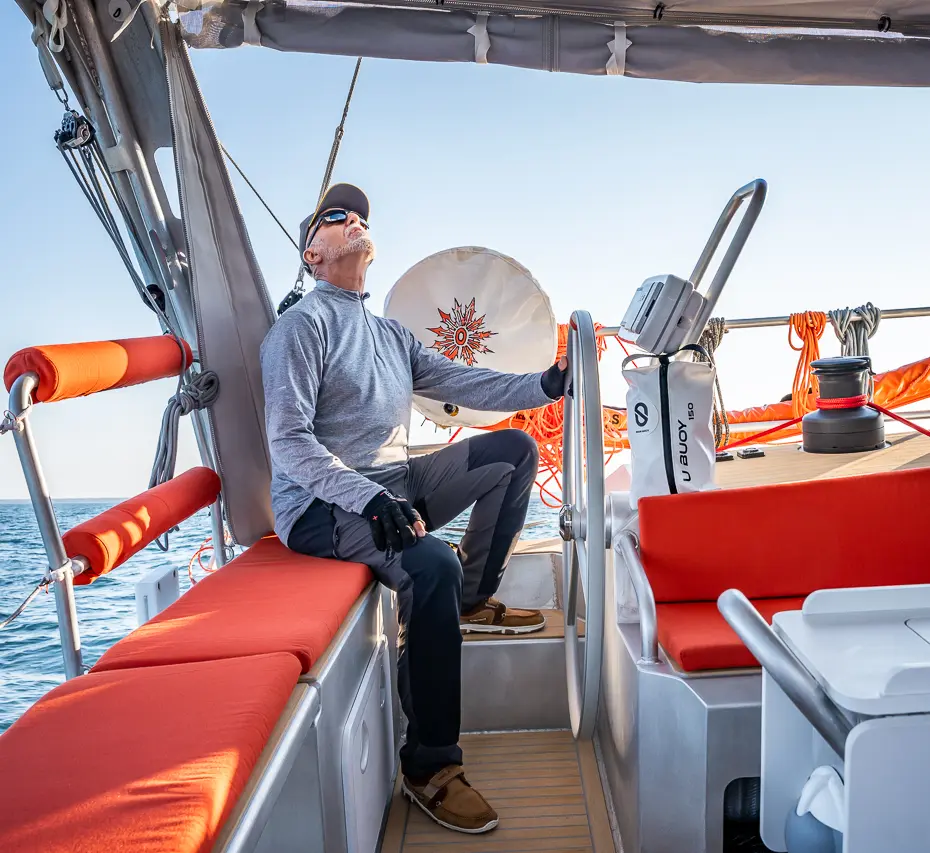
For over fifty years, Alubat has been developing its sailing yachts with one simple conviction: Modernity only makes sense if it brings real value to the sailor.
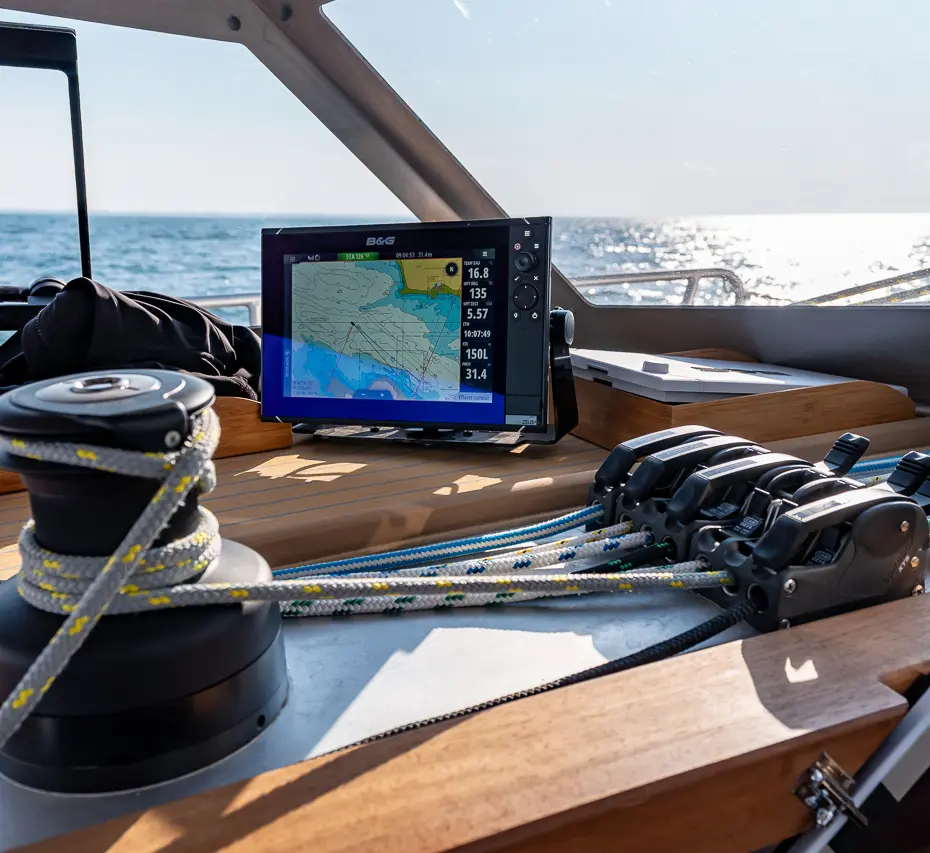
Whether it’s internal combustion or electric powertrains, 12- or 48-volt electrical systems, energy generation, electronics, connectivity, performance optimisation or enhanced comfort: the shipyard remains attentive to innovations that can improve safety, range, reliability and the enjoyment of life on board.
But innovation does not mean succumbing to passing fads.
For a yacht designed to sail far, sometimes for long periods and in demanding conditions, technology must above all be relevant, reliable and durable.
At Alubat, innovation is part of a process of continuous improvement, fuelled by the shipyard’s experience, feedback from owners, the work of the design office and discussions with architects and specialist partners.
DNA built to last
Over the decades, models have evolved, technologies have been updated and uses have changed. Yet the essentials remain the same.
Aluminium for strength and durability
A centreboard or lifting keel for freedom of sailing
Customisation enabling every boat to become a truly personal project
Innovation to keep paving the way for the sailing of tomorrow
It’s this combination that defines Alubat’s DNA.
Building a blue water yacht is not simply a matter of assembling the hull, the rig and the equipment.
It’s about designing a travelling companion capable of standing the test of time, adapting to its owner and taking them ever further afield.

